
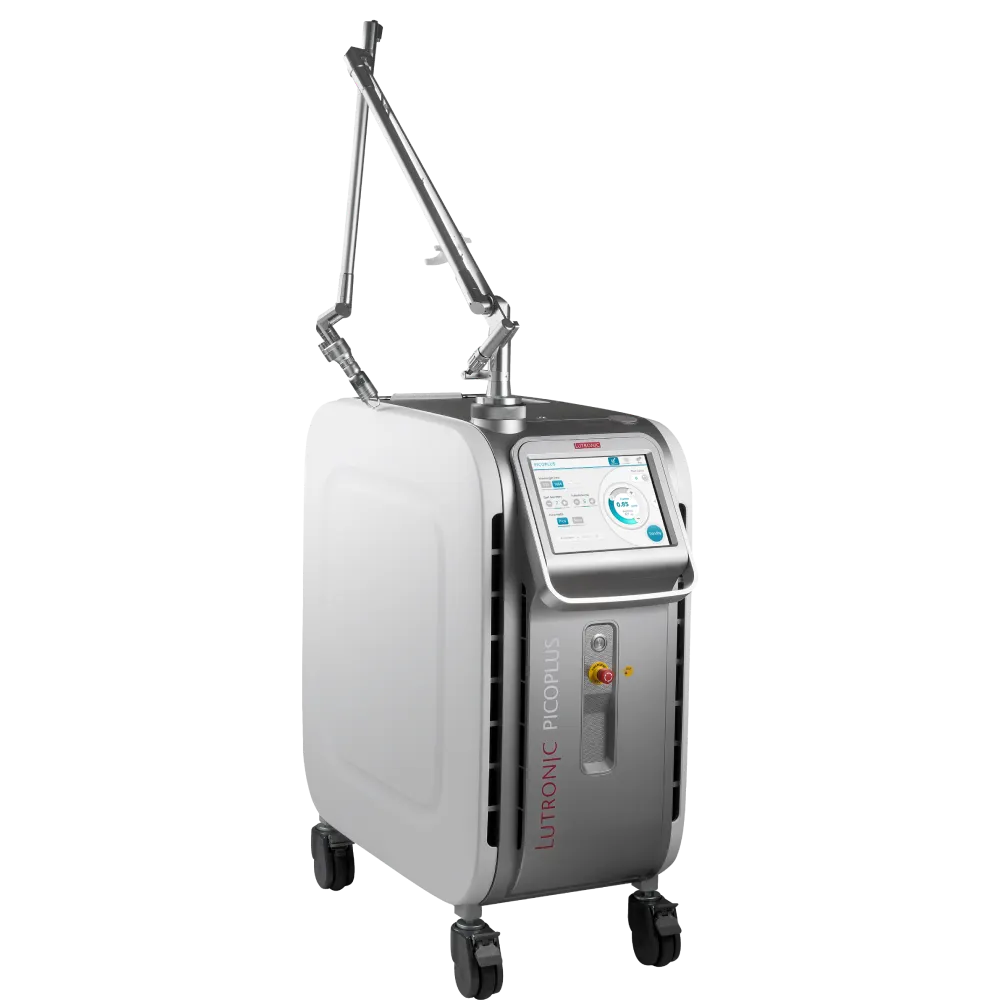
How Pico Laser Toning Works
Pico toning delivers laser energy in pulses measured in picoseconds, or trillionths of a second. This very short pulse duration is designed to reduce heat exposure to surrounding skin while targeting pigmented areas.
Unlike older lasers that break down pigment mainly through heat, pico lasers use a photomechanical effect, breaking pigment particles into smaller fragments through pressure rather than heat alone. The clinic describes this as a way to reduce thermal damage and related side effects compared to older laser methods.
After treatment, the broken-down melanin particles are gradually cleared from the body through the lymphatic system.
What Skin Concerns Pico Toning Is Used For
Pico toning is used for a range of pigmentation concerns, including melasma, freckles, age spots, lentigines, and Ota's nevus. Melanin tends to respond to shorter laser wavelengths, which is part of why pico lasers are used for these conditions.
That said, suitability and expected outcomes vary by individual and by the type of pigmentation. Melasma in particular is influenced by hormones and sun exposure, so pigmentation can return even after a series of treatments. Because of this, pico toning is generally recommended alongside ongoing skin care and consistent sun protection rather than as a stand-alone solution.
Treatment planning also depends on how deep and how widespread the pigmentation is. Shallow spots or freckles may respond more quickly, while deeper pigmentation typically requires a more gradual, multi-session approach.
Pico Toning vs. Traditional Laser Toning
The main technical difference between the two is pulse duration. Traditional laser toning uses nanosecond pulses, while pico toning uses picosecond pulses, which are about a thousand times shorter.
This shorter pulse allows energy to be concentrated more precisely, which may help break down pigment into finer particles while limiting damage to surrounding tissue. Because nanosecond pulses are associated with more heat spreading into nearby skin, some individuals with sensitive skin or a tendency toward post-treatment pigmentation may be considered better candidates for pico toning, as assessed at consultation.
Aftercare and Treatment Intervals
After a pico laser session, temporary redness or a warm, stinging sensation may occur for one to two days and usually resolves on its own. Depending on individual skin condition, some mild flaking or sensitivity may also occur.
Treatments performed less than a week apart may increase the risk of small white spots forming on the skin, so maintaining an appropriate interval between sessions is important. Sessions are generally spaced two to four weeks apart, with the number of recommended sessions varying by skin condition.
Consistent sun protection after treatment is considered an important part of aftercare, and starting treatment in autumn or winter, when UV exposure is lower, may help reduce the risk of side effects.
Why Treatment Plans Are Individualized
Because pigmentation differs in depth, type, and distribution from person to person, treatment approaches are adjusted individually rather than following a single fixed protocol. At Dr. Designer Clinic Myeongdong, this involves a direct skin examination to assess the depth and spread of pigmentation before deciding whether pico toning alone or a combination of treatments is appropriate.
An aftercare plan is also discussed as part of the overall approach, since consistent management and proper spacing between sessions play a role in longer-term results. Anyone considering pico toning is encouraged to have a consultation at Dr. Designer Clinic Myeongdong in Myeongdong, Seoul, to discuss a treatment plan suited to their skin.
Questions before your visit
Is pico toning only used for melasma?
No. Pico toning is used for a range of pigmentation concerns, including freckles, age spots, lentigines, and Ota's nevus, in addition to melasma. The approach and number of sessions depend on the type and depth of pigmentation, which is assessed at consultation.
How many sessions of pico toning are typically needed?
The number of sessions varies depending on skin condition and the type of pigmentation, with intervals of about two to four weeks between treatments generally recommended. A clinician can provide a more specific plan after examining the skin.
What should I do after a pico toning session?
Temporary redness or mild stinging may occur for a day or two after treatment. Consistent sun protection afterward is considered important, and maintaining proper spacing between sessions helps reduce the risk of side effects such as temporary white spots.